
Robert Herjavec Net worth & Financial Empire: An Analysis of the Shark’s $300 Million Fortune
Introduction: From Penniless Immigrant to Financial Shark
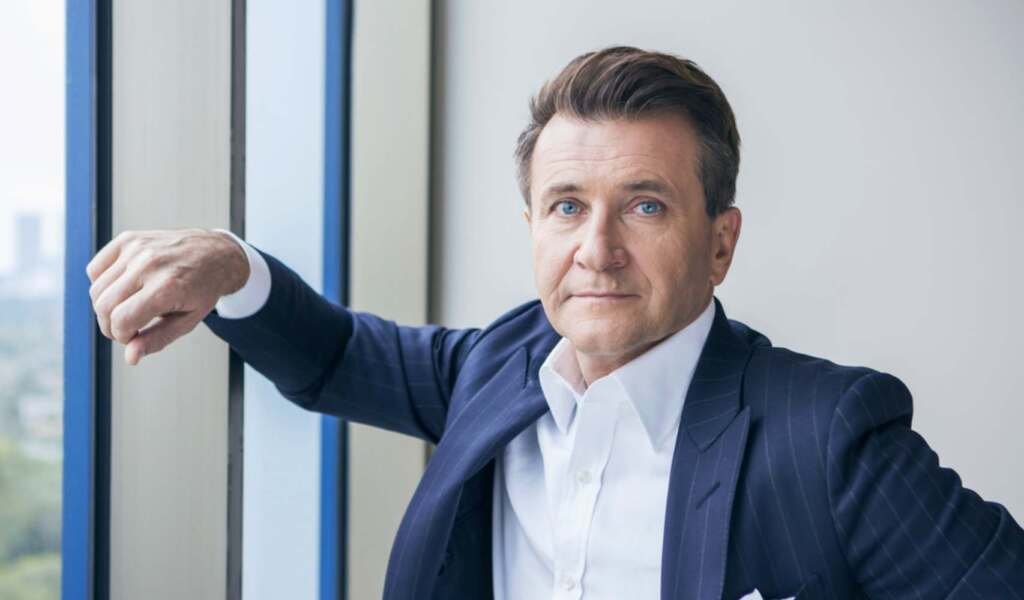
Robert Herjavec is a Croatian-Canadian businessman, celebrity investor, and television personality, best known globally as a “Shark” on ABC’s hit show Shark Tank . His public persona is that of a shrewd and empathetic investor, but this is built upon a formidable private foundation as a self-made technology tycoon. Herjavec’s story is a classic tale of immigrant success: arriving in Canada with his family at age eight with a single suitcase and $20, he has built a personal fortune estimated at $300 million through a combination of entrepreneurial grit, strategic business exits, and diversified investing .
This analysis delves exclusively into the financial architecture of Herjavec’s wealth, examining the key business sales, the growth of his flagship company, his investment portfolio, and the philosophies that guide his financial decisions.
The Pillars of Wealth: Core Business Ventures & Major Exits
Herjavec’s net worth is not a product of television fame but of foundational success in the technology sector, particularly in cybersecurity. His financial journey is marked by two major company sales and the sustained growth of a market-leading enterprise.
The First Major Win: Sale of BRAK Systems
Herjavec’s first significant wealth creation event stemmed from BRAK Systems, an internet security software integrator he founded in 1990 from his home basement after being fired from a previous tech job . Demonstrating early tenacity, he had entered the tech industry by convincing a startup to let him work for free while he waited tables to pay his rent . He grew BRAK into a leading firm, culminating in its sale to AT&T Canada in March 2000 for $30.2 million. This sale provided the capital that transformed him from a successful entrepreneur into a truly wealthy individual, funding future ventures and investments.
The Flagship Asset: The Herjavec Group (Cyderes)
In 2003, after a brief and unsatisfying retirement, Herjavec returned to his passion, founding The Herjavec Group with a modest team and $400,000 in sales . The company, a cybersecurity solutions integrator and managed service provider, became the central engine of his wealth. He grew it into one of Canada’s largest information technology security providers, with annual revenue soaring to over $200 million.
A pivotal liquidity event occurred in February 2021, when private equity firm Apax Partners acquired a majority stake in The Herjavec Group . While the terms were not public, such transactions for a company of its size and profitability typically value the business at a significant multiple of its revenue.
Herjavec retained a substantial ownership stake and remained as CEO. This transaction likely converted a portion of his equity into a nine-figure cash sum while allowing him to benefit from the company’s continued growth under the Apax umbrella. The company later merged with Fishtech Group and was rebranded as Cyderes in June 2022, with Herjavec at the helm until he stepped down as CEO in September 2024 to focus on his investments and family, while remaining a core business focus .
Table: Major Business Ventures & Financial Milestones
Investment Philosophy and Portfolio Strategy
Beyond his operating companies, Herjavec’s wealth is managed through a disciplined and philosophical investment approach, visible through his public statements and Shark Tank deals.
The Real Estate Foundation
Herjavec has publicly declared real estate as his preferred asset class for preserving and building foundational wealth. In a revealing discussion at the 10X Growth Conference, when asked where he would invest his “last million dollars,” he answered immediately: “I would invest in real estate” . His rationale is both psychological and financial: “Because desperate people do stupid sh-t — and you’ve got to take desperation out of the equation”.
He views real estate as a source of stable passive income that provides security, allowing an investor to “forget it existed” and then pursue other riskier opportunities . This is not just theory; he owns a multi-million dollar mansion in Toronto’s prestigious Bridle Path neighborhood, which he purchased for $7.5 million, along with several other vacation properties .
Shark Tank and Venture Investing
As a mainstay on Shark Tank since its first season in 2009 and a former Dragon on Canada’s Dragons’ Den, Herjavec has made scores of investments in startups . With over 80 deals to his name, this portfolio represents a high-risk, high-potential-reward segment of his assets . His most successful deal to date is a $100,000 investment for a 10% stake in Tipsy Elves, a novelty sweater company that has grown into a multi-million dollar e-commerce business . Other investments include Aura Bora herbal sparkling water.
He is candid about failures, citing a breathalyzer company that all the Sharks invested in, which later faced FDA investigations, as his worst investment—a lesson in due diligence . This portfolio is a testament to his belief in supporting entrepreneurs and leveraging his capital and expertise to grow small businesses.
Debt Relief Advocacy: A Personal Mission Turned Partnership
A less conventional but meaningful component of his recent financial activity is his partnership with Debt Clear USA, powered by Americor. Herjavec has highlighted that one of his first jobs was in debt collection, giving him a unique perspective on financial struggle . This partnership aligns with a pragmatic side of his financial philosophy: the critical importance of managing liabilities. While this is a business endorsement, it reflects his understanding that building wealth is as much about intelligently reducing debt as it is about acquiring assets.
Financial Principles and Wealth Management Ethos
Herjavec’s approach to money is deeply intertwined with his immigrant upbringing and early struggles.
- Passion Over Profit as a Driver: He consistently advises that passion, not the desire for money, is the only sustainable fuel for entrepreneurial success. “The biggest mistake I see people do is, they start a business to make money… on those cold days, money doesn’t keep you warm at night” . His own career—returning to cybersecurity after a lucrative exit—exemplifies this principle.
- Expertise as a Financial Tool: He credits deep knowledge in a specific field (cybersecurity) as a primary wealth-building tool. “Become an expert at something… such an expert that you can walk into a room and people will pay you for your knowledge” . His fortune was built by monetizing his expertise, not through passive or speculative means.
- Resilience and Adaptability: Having started with nothing, Herjavec maintains a foundational confidence. He told investor Grant Cardone, “I believe if I have nothing, I’d become wealthy again” . This mindset informs a risk-tolerant but calculated approach to investing and business.
Table: Herjavec’s Stated Investment Priorities & Rationale
Conclusion: The Anatomy of a Self-Made Fortune
Robert Herjavec’s $300 million net worth is a complex structure built on a clear foundation. The cornerstone was laid with the lucrative sale of his first cybersecurity company. The central pillar is the value derived from building and partially selling his second, much larger cybersecurity empire, The Herjavec Group/Cyderes. This core is buttressed by a disciplined investment strategy that prioritizes income-generating real estate and a diversified portfolio of startup equity. His financial philosophy—prioritizing passion, expertise, security, and resilience—acts as the blueprint that guides all these constructions.
Far from being merely a television personality, Herjavec is a case study in methodical, expertise-driven wealth creation, demonstrating that substantial fortune is often the result of decades of focused execution in a chosen field, followed by intelligent capital allocation.
Also Read: Misha Ezratti’s Net Worth
Frequently Asked Questions about Robert Herjavec Net Worth
What is Robert Herjavec’s net worth?
As of early 2026, Robert Herjavec’s net worth is estimated at $300 million. This figure is based on public analyses of his business sales, company revenues, and investment portfolio .
How did Robert Herjavec make his money?
Herjavec made his fortune primarily in the cybersecurity technology sector. His wealth originated from the sale of his first company, BRAK Systems, for $30.2 million, and was massively expanded by founding and growing The Herjavec Group (now Cyderes), which generates over $200 million in annual revenue. His investments and television career contribute to but are not the primary source of his wealth.
What was Robert Herjavec’s biggest business deal?
Financially, his biggest deal was likely the sale of a majority stake in The Herjavec Group to the private equity firm Apax Partners in 2021. While the sum was undisclosed, it represented a major liquidity event from his most valuable asset . The sale of BRAK Systems for $30.2 million was his first defining financial exit.
Does Robert Herjavec still own The Herjavec Group (Cyderes)?
Following the 2021 acquisition by Apax Partners, Herjavec retained a significant ownership stake in the company, which later became Cyderes. He stepped down as CEO in September 2024 but remains closely focused on the business as a significant shareholder.
What is Robert Herjavec’s most successful Shark Tank investment?
His most successful Shark Tank investment to date is Tipsy Elves, the festive apparel company. He invested $100,000 for a 10% stake, and the company has grown into a massively profitable e-commerce brand.
Where would Robert Herjavec invest his last $1 million?
He has stated unequivocally that he would invest it in real estate. He views property as a way to create a secure, passive income stream that removes financial desperation from the equation, allowing him to pursue other ventures.
What is Herjavec’s involvement with Debt Clear USA?
Herjavec is a partner and endorser of Debt Clear USA, a debt relief program powered by Americor. He cites his early job in debt collection as motivation for this partnership, which aims to help people restructure and reduce unsecured debt.
How does Herjavec’s net worth compare to other Sharks on Shark Tank?
With an estimated $300 million, Herjavec’s net worth is substantial but generally considered to be in the mid-range among the main Sharks. It is notably less than that of Mark Cuban or Kevin O’Leary but is built on a similarly robust foundation of successful business exits.
What are the key principles of Herjavec’s investment philosophy?
His key principles include: investing in passion-driven businesses, building a foundation of secure assets (like real estate), becoming an expert in your field to create value, and maintaining resilience to adapt to change and failure.
Did Robert Herjavec inherit any wealth or start from nothing?
Herjavec is entirely self-made. He immigrated to Canada from Croatia (then Yugoslavia) as a child with his family, who arrived with a single suitcase and very little money. He worked minimum-wage jobs before entering the tech industry.